
Steppelands 2.0
Reworked transcript of my talk at the Yale Philosophy & the Built Environment Working Group, October 30, 2024

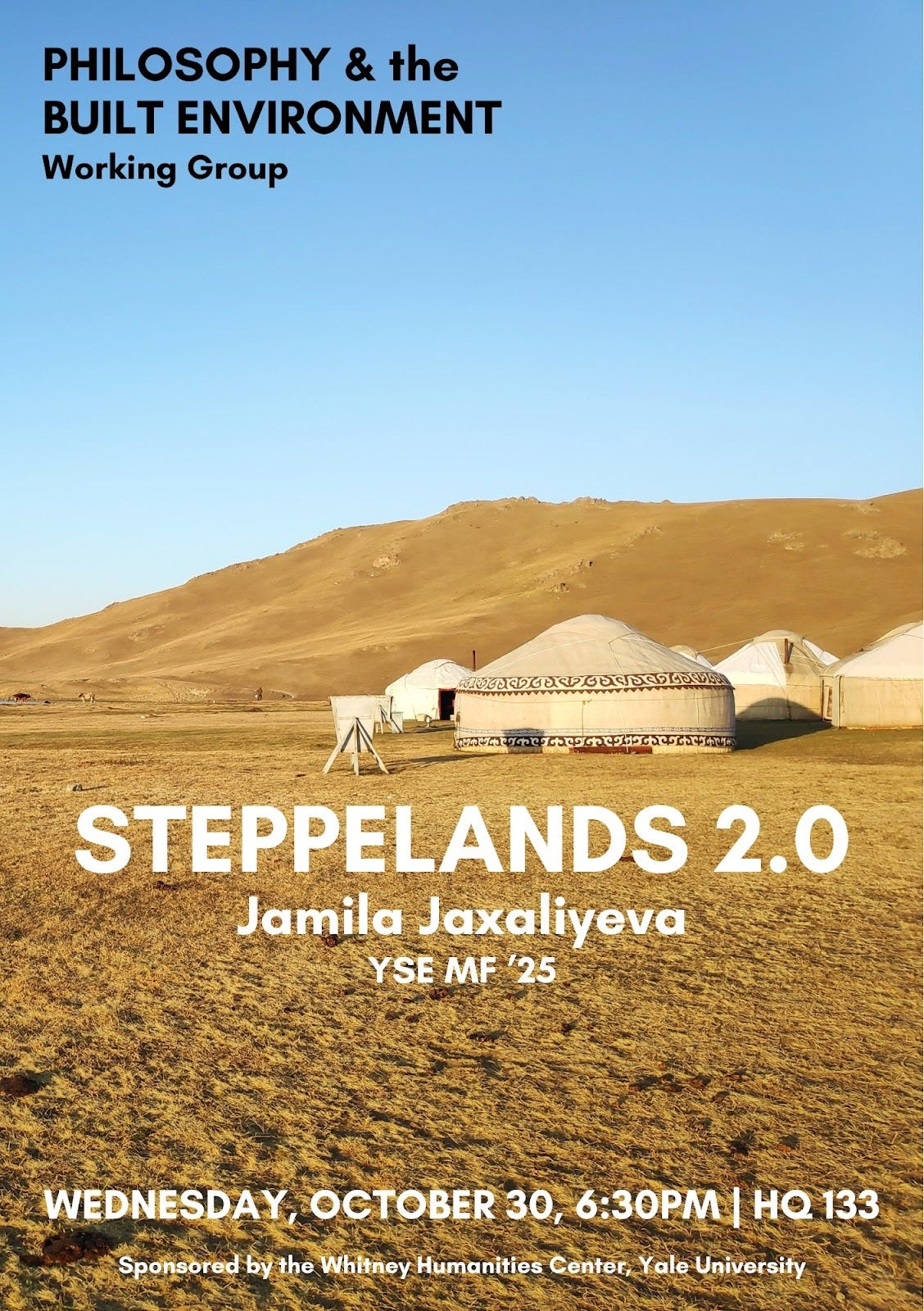
Hello everyone—thank you so much for being here today. I’m really excited to share my presentation, Steppelands 2.0, where I explore a vision for Kazakhstan’s land and cultural heritage that is both sustainable and forward-looking.
I also want to give a huge thank-you to Ishaan Jajodia—not only for creating the beautiful cover art, which perfectly captures the spirit of what I’m trying to convey, but also for organizing this working group.
This presentation draws on two main sources. The first is my grandfather Mukhambetkali Jaxaliyev’s book, Economic and Socio-Political Views of Kazakh Thinkers in the Second Half of the 19th and Early 20th Century. The second is my own work in the international livestock sector, which gave me the opportunity to compare production systems and rural lifestyles across different parts of the world.
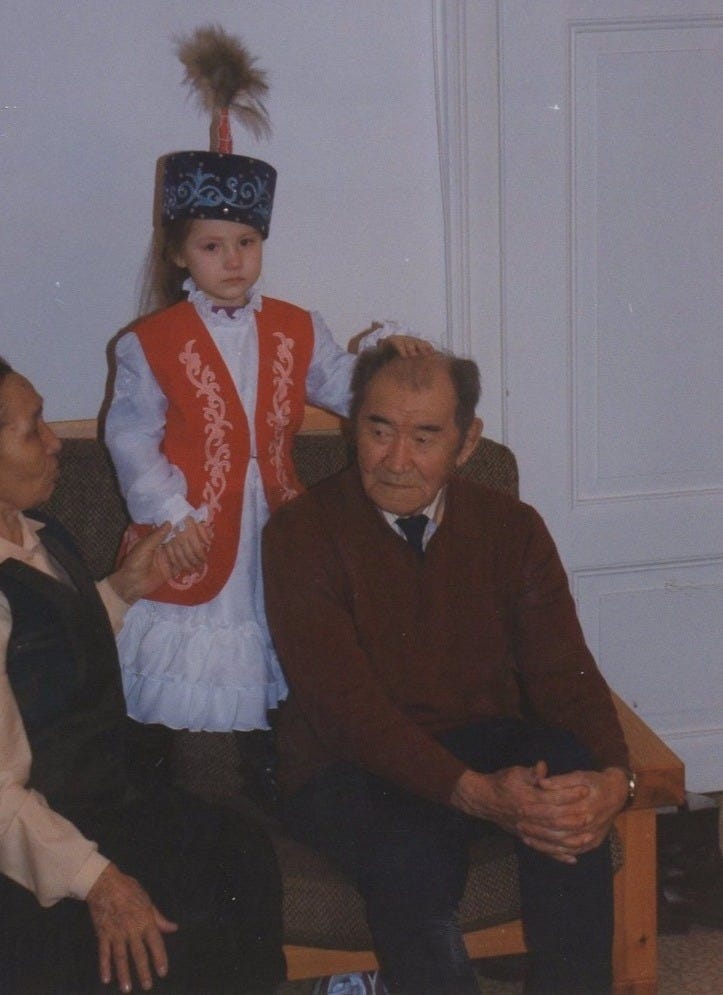
Before going further, I want to offer some context about my grandfather’s book, because it helps explain what it meant to write and even exist as a Kazakh intellectual in the Soviet era. Censorship was intense. Writers had to walk an extremely narrow line: they were expected to criticize nationalist movements, openly oppose the Tsarist government, and strongly endorse Soviet ideology, whether or not they personally believed in it.
My grandfather, who was also a World War II veteran, was very headstrong and frequently clashed with the system. The pressure this placed on our family was profound. My father, at just eight years old, was so affected by what he witnessed that he once fantasized about assassinating the First Secretary of the Communist Party from our apartment balcony, meticulously planning out the steps and timing he would need to escape afterward. So yes, don’t mess with my dad.
This family story connects directly to a much more recent example. Some of you may be familiar with Saule Omarova, a Kazakhstan-born professor at Cornell who even guest-lectured here (at Yale) earlier this year. She was nominated by President Biden to lead the Office of the Comptroller of the Currency, but ultimately withdrew after facing intense criticism during her Senate confirmation hearings. Her views were labeled “communist,” largely because of a thesis she had written while studying in Moscow.
What many people missed is that, much like my grandfather, she had to write in that way in order to survive and publish under Soviet censorship. Her case is a reminder of how Kazakhs learned to adapt to the system simply to exist within it, and how those adaptations are still misunderstood today.
Identity Struggle and Cultural Influences
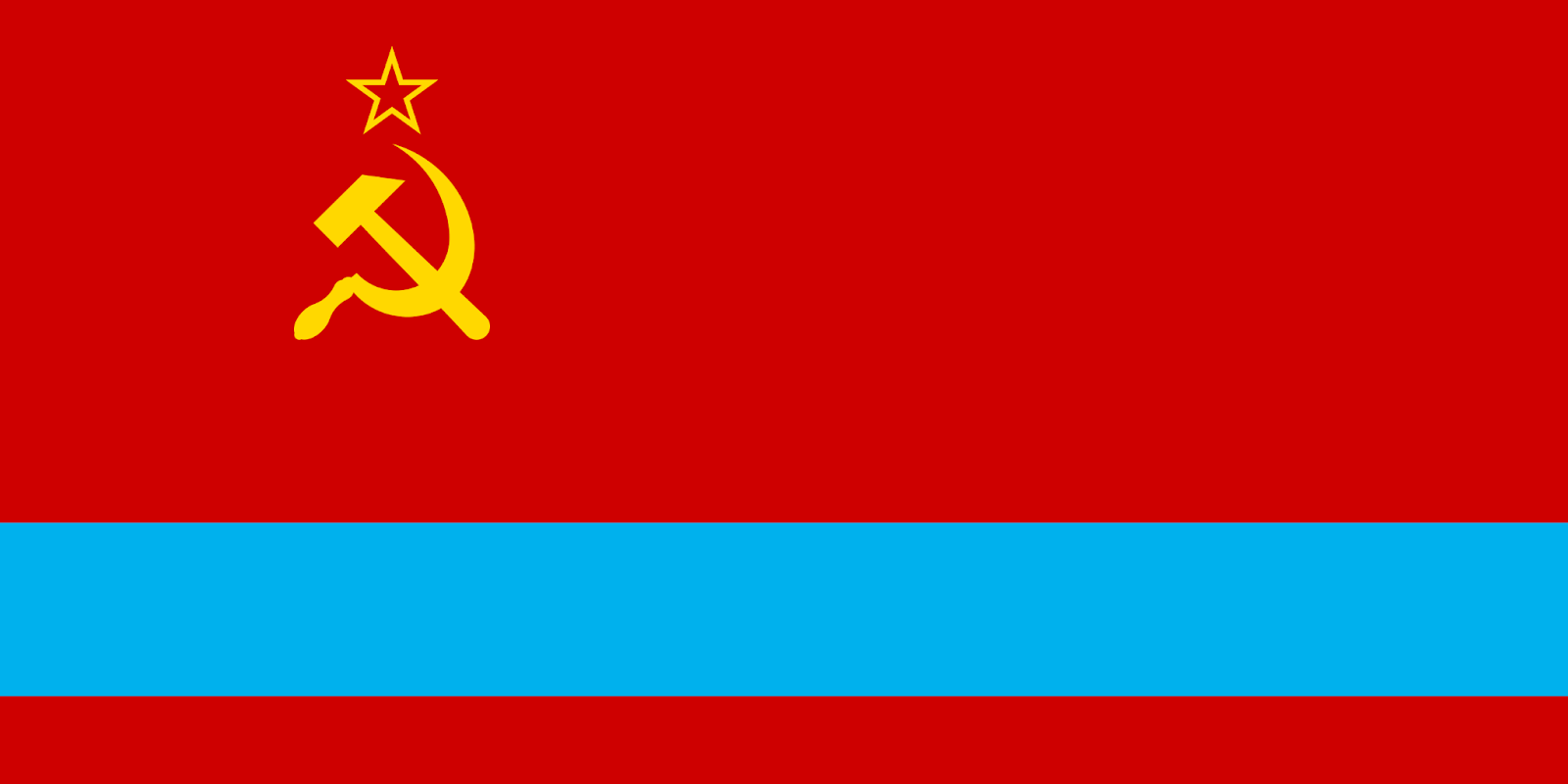
Let’s talk about Kazakhstan’s identity because it’s layered, unresolved, and anything but simple.
Our nomadic past shaped who we are through a deep connection to land, livestock, and a way of life built around movement, adaptation, and resilience. That foundation mattered. Then came the Russian Empire, followed by Soviet rule, which imposed centralized governance, sedentary agriculture, and systems that steadily pulled us away from those nomadic roots.
When the Soviet Union collapsed in the early 1990s, Kazakhstan suddenly found itself independent, but without a clear answer to what independence actually meant. Since then, we’ve been navigating an ongoing identity struggle: trying to define ourselves as a nation after centuries of external control.
Modern Kazakhstan is marked by a kind of cultural dissonance. Kazakh nomadic traditions exist alongside—and are entangled with—Russian, Soviet, Turkic, and Islamic influences. These layers don’t always sit comfortably together. In many ways, I embody that contradiction myself, with a proud Kazakh father and an equally proud Russian mother. That tension mirrors the country as a whole as it is still working out what it means to be truly Kazakh.
This question of identity remains deeply sensitive, especially among younger generations, who often hold very strong views. I’ve seen this firsthand. I was effectively “canceled” from the Yale Kazakhs group chat for defending another student who was removed simply for pointing out (factual) statements about Kazakhstan’s Russian and Soviet legacy.
That experience made something very clear: these debates aren’t just historical or academic. They’re alive, emotionally charged, and still deeply contested today.
Opportunity in Kazakhstan’s Open Lands
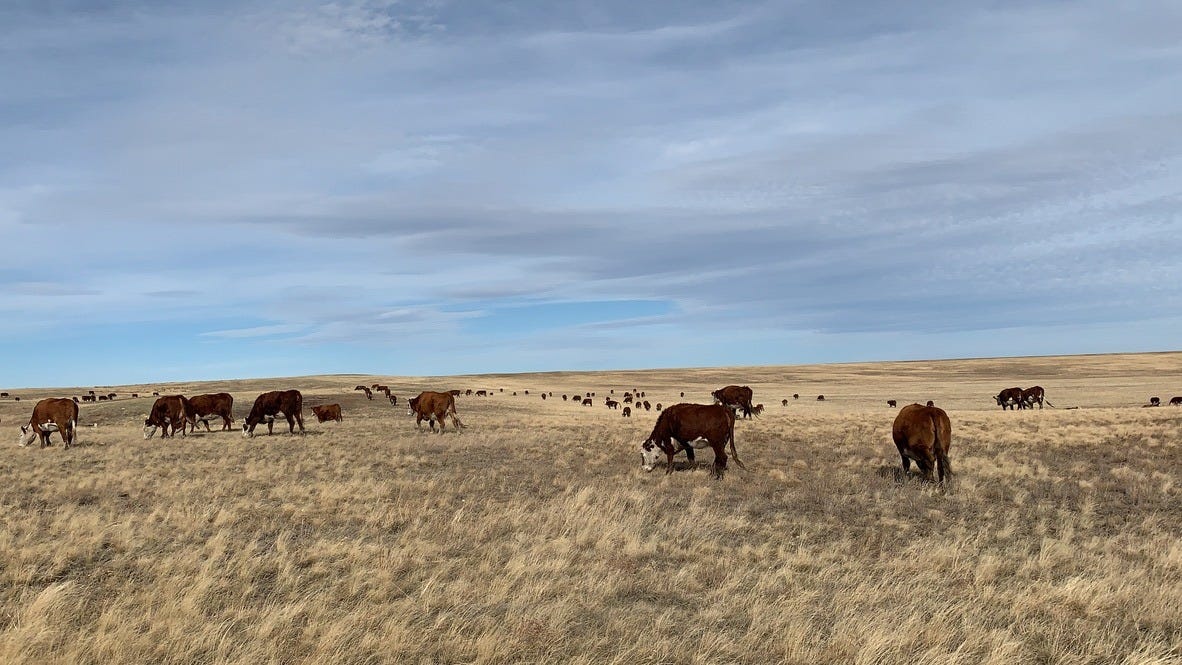
With Kazakhstan’s unique identity comes an equally unique opportunity. We are one of the few countries, perhaps the only one, with such vast amounts of open, unused land. Officially, estimates range from 2 to 5 million hectares, but if we include underutilized areas, the true figure is likely far higher, potentially reaching tens of millions of hectares.
This land is an enormous resource. Much of it is marginal, meaning it cannot produce significant crop yields, but that makes it ideally suited for livestock. Kazakhstan has the potential to build a truly one-of-a-kind sustainable livestock industry, one that builds on its historical strengths rather than copying external models.
There is, however, a strong trend in Kazakhstan toward adopting Western practices without fully considering whether they are appropriate for our context. For various reasons, there has long been a belief that “the West knows best”—a mindset we likely inherited from Russian influence, as Tsars historically looked to Europe for guidance. One of Kazakhstan’s most prominent thinkers, Chokan Valikhanov, who was educated within the Russian system, viewed European culture as the highest standard of civilization. He wrote:
“We believe that the adoption of European, universal education should be the ultimate goal of every nation capable of development and culture. Culture can improve human beings, just as careful breeding improves animals. But to make a Kazakh capable of absorbing European transformative ideas, it is first necessary to develop his skull and nervous system through education. An organism cannot accept what it has not grown to.”
While I respect and recognize the strength of Western and European culture—and I say this as someone who grew up in Germany and was shaped in many ways by European thinking—I do not believe it should be applied everywhere. Culture grows out of its environment, and Europe’s environment is fundamentally different from ours.
A simple, somewhat humorous example from real life illustrates this. Kazakh dairies are nowhere near as productive as German dairies. They can have excellent facilities and high-quality cows, but they lack the most critical factor that makes the system work: Germans running them.
A similar pattern appears in beef production. In Kazakhstan, there is a growing push to replicate the U.S. beef production model, despite its own internal problems. In the United States, feedlots are a central part of the production chain and are only viable because government-subsidized corn keeps them economically feasible. Kazakhstan does not have that subsidy structure. As a result, feedlots here are often neither practical nor sustainable, especially given how much marginal land we have available for grazing.
Then there is fencing, which runs directly counter to our traditional way of managing land. In the West, fences emerged because of limited space and the need to define property boundaries, shaping Western culture, philosophy, and economies over centuries. In Kazakhstan, by contrast, we historically had no fences and largely still don’t. This openness fundamentally shaped our culture and our relationship with land. We did not own land; we owned livestock. Wealth was measured by the number of animals, not acres. The land remained open, allowing people, livestock, and wildlife to follow migration patterns and seasonal changes.
Introducing widespread fencing today would fragment landscapes, interfere with wildlife movement, and clash with traditional grazing practices. Ironically, even the American West is now struggling with the consequences of fencing, with many conservation groups working to develop wildlife-friendly alternatives.
So rather than imposing imported solutions, the real question should be: how can we develop our land sustainably in a way that respects our environment, culture, and history?
Environmental Challenges
With opportunity also comes a long list of challenges. Kazakhstan’s environment has been shaped—and damaged—by centuries of industrial exploitation, largely under Russian rule and other external powers. The land was treated as an extractive asset, stripped of resources with little concern for long-term ecological consequences. That dynamic has not disappeared with independence. It continues today, despite having a Kazakh government that should, in principle, prioritize the interests of its own people.
As a result, we are left with widespread land and soil degradation. Much of this stems from intensive crop systems introduced during the Soviet era on landscapes that were never ecologically suited for large-scale agriculture. At the same time, poor grazing outcomes emerged from the forced sedentarization of Kazakh people. Traditional mobile grazing systems were dismissed by Soviet planners as “backward,” leading to the disastrous Kazakh famine of 1930, and the longterm loss of generations of traditional ecological knowledge.
We also lost many of our traditional livestock breeds. They were crossbred or replaced with Western breeds considered more “efficient.” But efficiency is context-dependent. What works in England does not necessarily work on the Kazakh steppe.
The consequences are visible today. Desertification is accelerating, and wildlife—most notably the endangered saiga antelope—is under increasing pressure. Migration routes that once stretched freely across the steppe are now fragmented by agriculture, industrial infrastructure, and, increasingly, fencing. The growing disconnect between land use and traditional knowledge is costing us dearly, and finding solutions that respect both ecological limits and cultural heritage has become urgent.
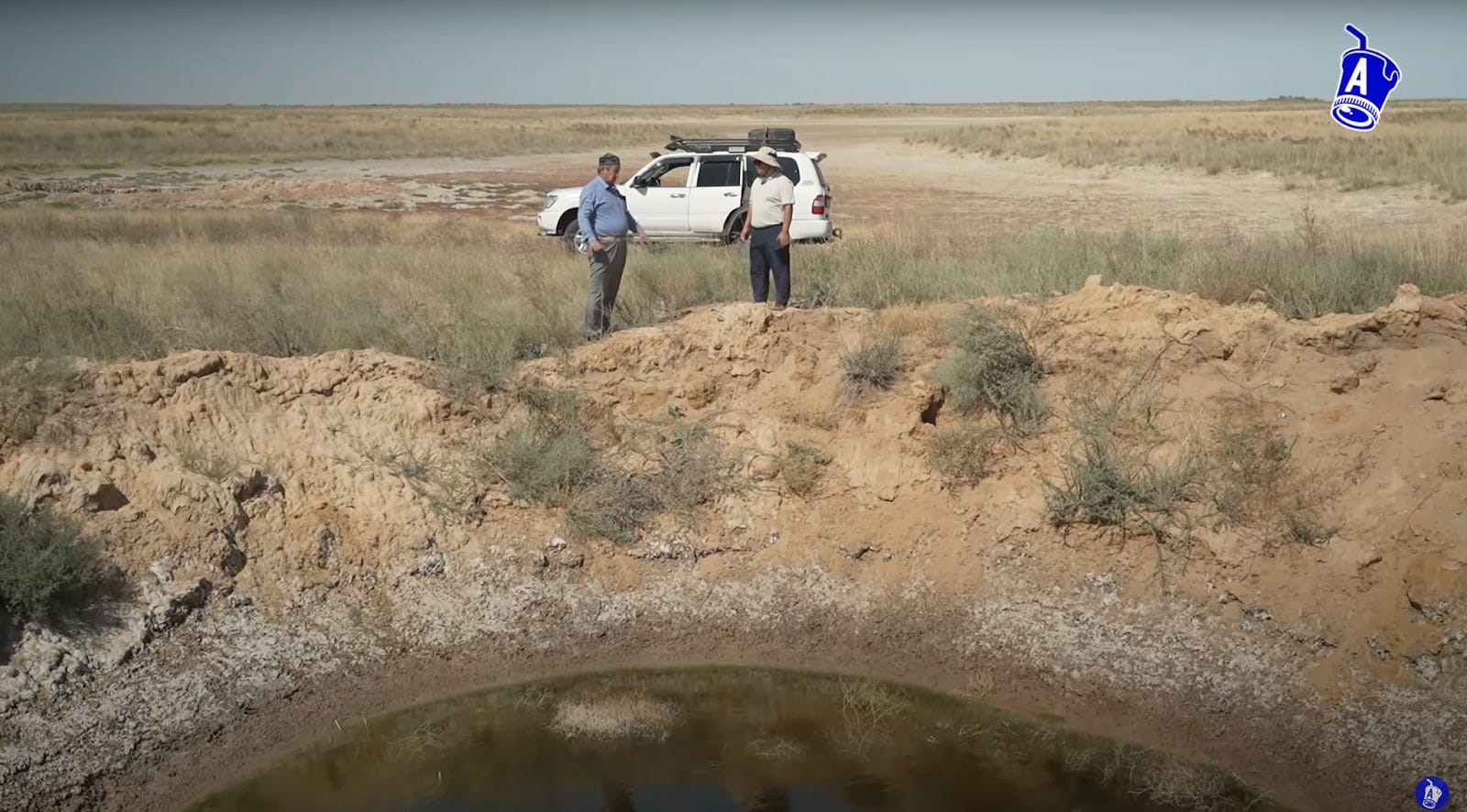
When discussing environmental challenges, I cannot omit Russian missile testing on Kazakh land. Although Kazakhstan formally leases certain territories to the Russian military, missiles frequently land outside designated zones—often on the land of my own tribe in western Kazakhstan. The image shown above is a screenshot from the Qazaq AIRAN YouTube channel. It shows Nagim, a member of my immediate tribe, standing beside an impact crater filled with missile debris and chemical residue.

These chemicals seep into groundwater, and the area has experienced alarmingly high rates of birth defects. I find the image above especially symbolic: a young girl walking through a pine forest planted by Jangir Khan—a ruler my grandfather described as a despot who abused his power.
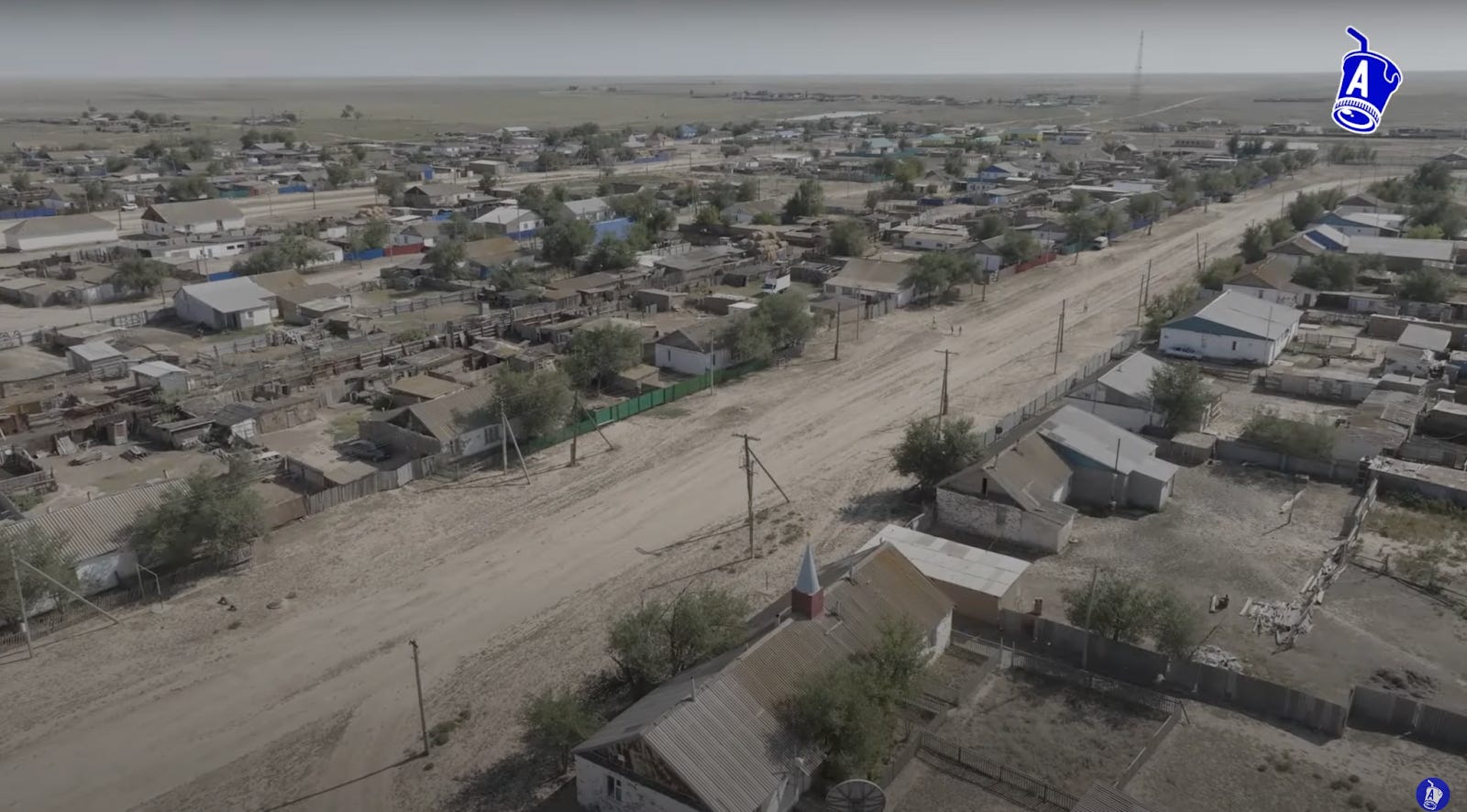
Above, another screenshot from the report, where we see Bokey Orda, former headquarters of the Khan, and where my grandfather grew up, which brings me to the next topic.
Social Challenges
It’s clear that social challenges are just as critical as environmental ones.
Kazakhstan is experiencing significant “land flight,” with people increasingly moving to cities and leaving large agricultural areas empty. Rural regions suffer from weak infrastructure—poor roads, limited healthcare, unreliable electricity—which makes daily life difficult and agricultural work unattractive. Much of this is tied to corruption, which unfortunately remains entrenched across many sectors.
There is also a widespread perception that pastoralism and farming are outdated and undesirable careers. Women, in particular, are often reluctant to live in rural areas. My own family reflects this mindset. When my grandfather once received a strong job offer in a rural area, my grandmother responded, “What am I, a woman of culture, supposed to do in the village? Milk cows? I’m no peasant.”
Interestingly, my mother and aunt—both Russian and shaped by Soviet-era values—reacted similarly to my own work as a range rider in Wyoming. My aunt said, “Good Lord, she used to wear ball gowns, and now look at her.” My mother warned me, “Don’t you dare fall in love with a cowboy and stay there.”
There is also a lingering belief from Soviet times that government jobs are more prestigious than agricultural work. As a result, many families encourage their children to pursue administrative or bureaucratic careers rather than work with land or livestock.
Addressing these social challenges requires making rural life genuinely appealing again. Infrastructure needs serious investment, but perception matters just as much. I want people to admire those who work with livestock, to see them as skilled professionals, much like American cowboys are romanticized and respected in the United States and beyond. Reframing pastoralism as a valued, respectable profession is essential if Kazakhstan is to have a viable agricultural and rural future.
The solution: Steppelands 2.0
Now I’d like to propose a solution. This isn’t about preserving tradition for its own sake, it’s about reimagining it in a way that is forward-looking and globally relevant.
There is a long-standing misconception, reinforced by thinkers such as Marx and Engels, Montesquieu, and Hegel, that nomadic societies represent a primitive or incomplete stage on the path toward so-called “higher” forms of civilization. Hegel even framed nomadism as a step toward a “true state,” one defined by cities and centralized governance. I challenge this view. These thinkers failed to recognize how adaptive, resilient, and ecologically balanced nomadic systems actually are.
Kazakhstan is uniquely positioned to rethink this narrative. We are not locked into rigid institutional or land-use structures, and we still have both the physical space and the cultural depth to design a system that is our own. Today, we also have access to modern tools and technologies that allow us to take the strengths of traditional nomadic systems and enhance them rather than replace them.
I imagine a Kazakhstan that leads the world in sustainable meat production—a system that is environmentally responsible, economically viable, and deeply rooted in our heritage. This is an opportunity to demonstrate that tradition and progress are not opposing forces, but can move forward together. If done right, Kazakhstan could offer a model that many other countries aspire to but can no longer achieve because, for them, it is already too late.
Feasibility from my Personal Experience at Cow Camp
Now I’d like to share some insights from my summer living in cow camp in the Wyoming mountains, where I worked as a cowboy. That experience gave me very concrete, practical ideas for how this vision could be applied in Kazakhstan.
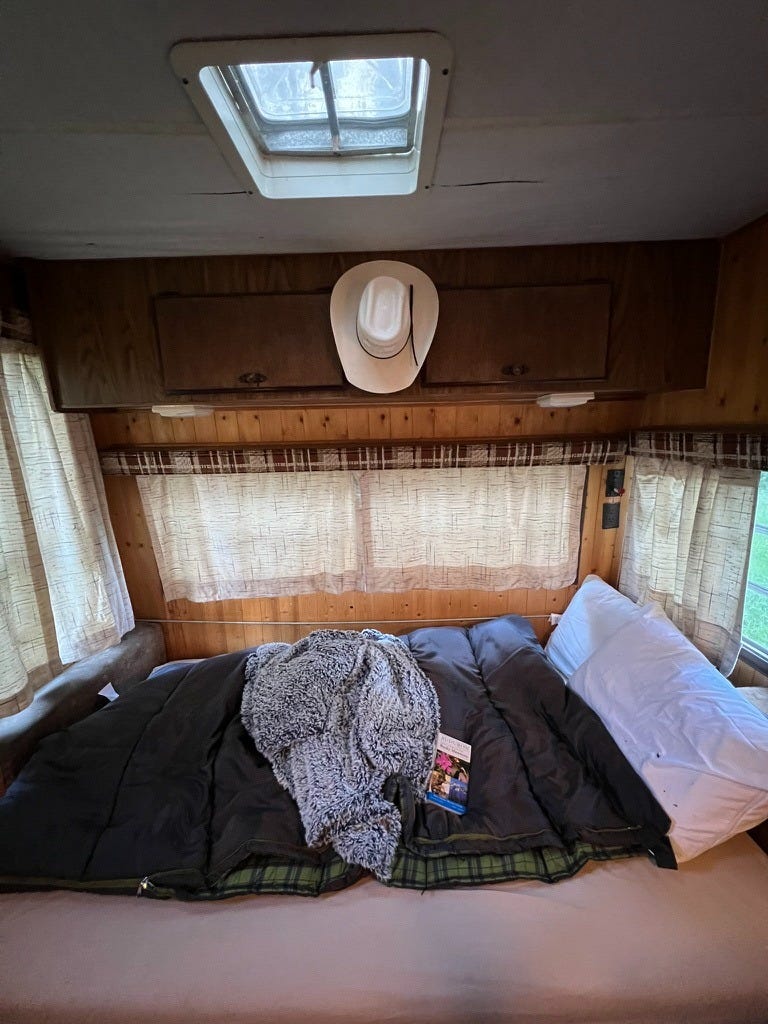
Let’s start with the basics: housing. We need mobile yet comfortable living spaces. That means durable, easy-to-maintain campers designed for long stays on the steppe, similar in spirit to traditional yurts, but more practical for modern use. I would design them with minimal corners and hidden spaces to make cleaning easier and prevent rodents. I considered showing photos from my mouse adventures, but decided to spare you.
For heating, we used propane heaters in Wyoming, but a more sustainable option in Kazakhstan could be dried cattle or horse dung, something most kazakh villagers already use. It’s renewable, efficient, and honestly, I enjoy the smell. It’s just fermented grass.
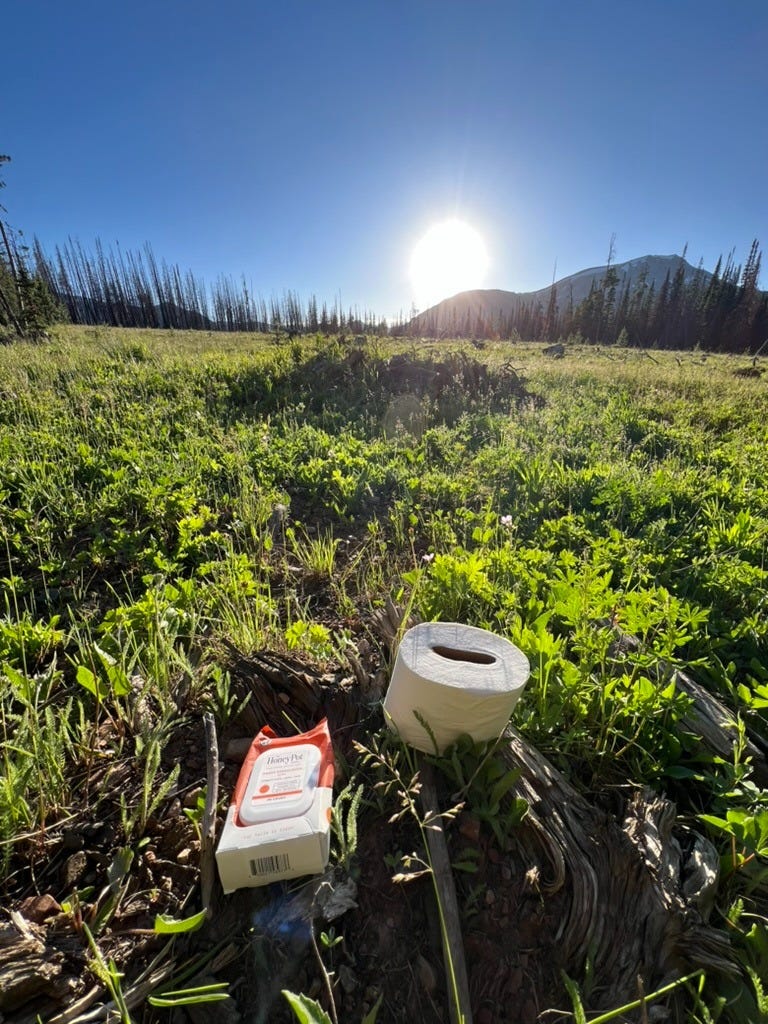
Sanitation can be simple. An outdoor toilet can be as basic as digging a hole—and I genuinely miss that view. Water can come from a solar shower. For electricity, solar power should be used as much as possible, with a backup generator when needed. This setup would also include Starlink internet, which makes homeschooling, remote work, and even higher education possible.
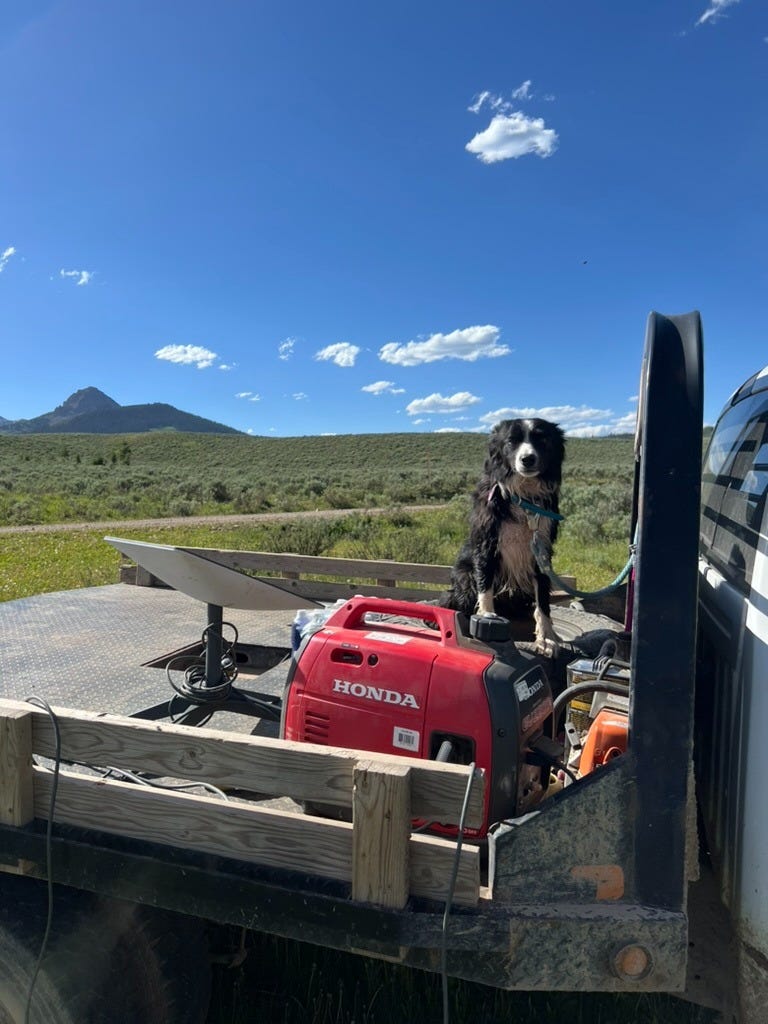
Now to the most important part: grazing management. This is where technology really changes the game.
We already have tools like GPS collars, virtual fencing, and satellite monitoring. GPS collars and virtual fencing allow cattle to be located and moved without physical fences. Satellites or even drones can monitor pasture quality, soil moisture, and vegetation health in real time. That data can then be used to adjust grazing pressure and decide where cattle should move next. Applied properly, this approach could fundamentally transform how land is managed sustainably in Kazakhstan.
Finally, there’s the social side. To meet social needs, families within a certain radius would regularly gather on weekends for traditional games, sports, and cultural events. This is how it has been done for centuries.
In practice, this wasn’t very different from my life in Wyoming. I would spend up to ten days in the mountains, often with just one or two other riders, then come down to the valley to run errands, see friends, visit rodeos, and ignore my mother’s advice to hang out with cowboys. Personally, I think five days in the mountains would be an ideal interval. That rhythm—intense work followed by social reconnection—is essential. It’s what keeps nomadic communities functional, connected, and alive.
Diary of a Modern Nomad
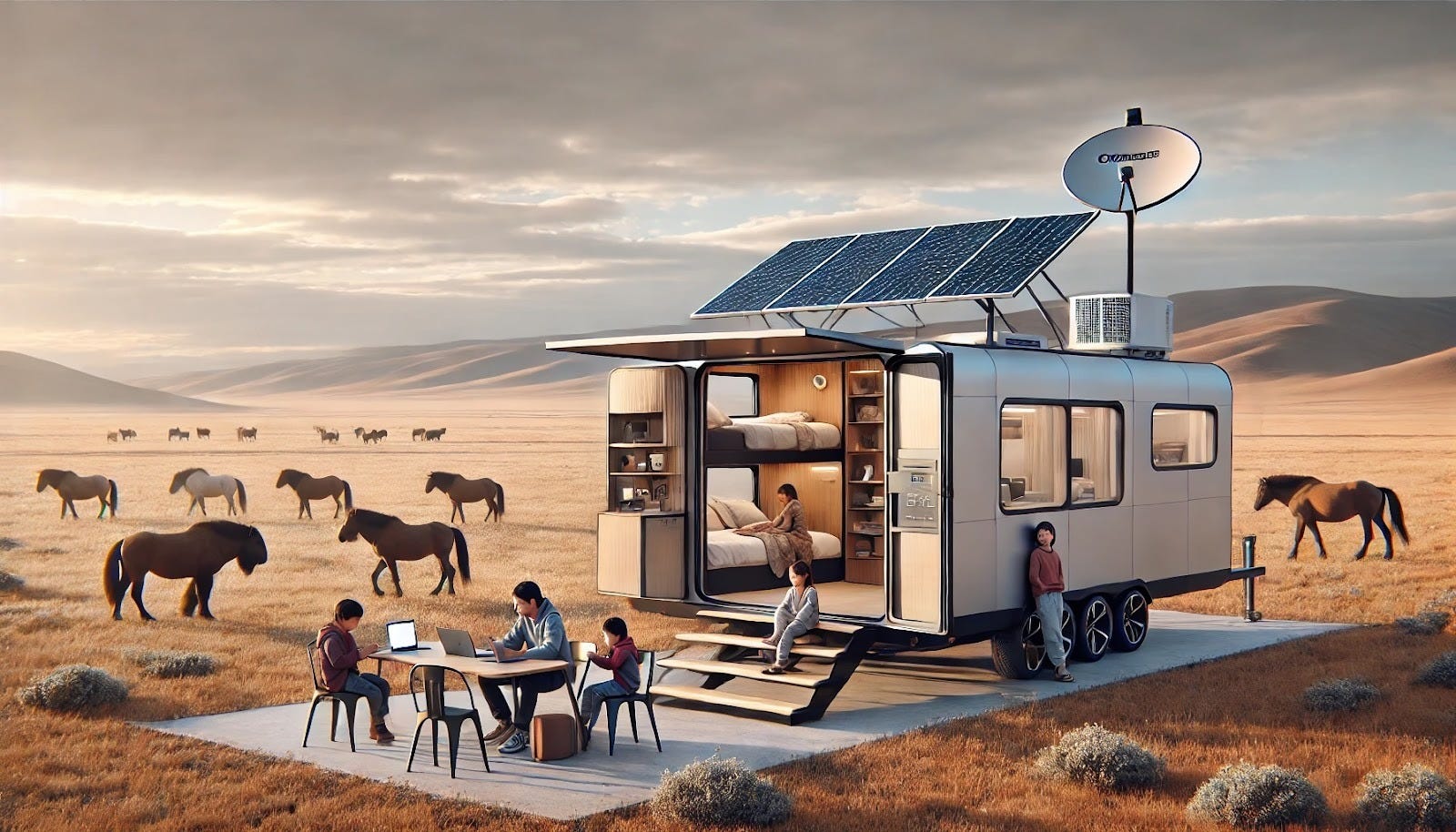
I asked ChatGPT to generate an image of what this vision might look like, and this is what it produced: a solar-powered camper, kids doing their homework with the help of Starlink, surrounded by open land, horses, and cattle. I also asked it to write a diary entry from the perspective of one of the kids, a teenager living in a world where tradition meets technology:
I wake up to the smell of breakfast cooking in our camper, which I share with my parents and siblings. My grandparents are living it up in the city, and my cousins are a few miles away in their own camper. We’re responsible for around 200 cows and 50 horses, and every day out here feels like an adventure.
After breakfast, I saddle up and check the satellite app on my phone. It shows where today’s best grazing spots are, based on pasture health and cattle movement tracked by GPS. Before heading out, I scroll through Instagram to see if my crush—who’s a kokpar player—posted any new stories. I’ll see him this weekend at the big championship, where all the nomadic families gather for games, food, and competition.
Once the cattle are set for the day, it’s time for homework and a virtual lecture. Most of my schooling is online, but I’m planning a trip to the city soon for a biology lab workshop. As the sun sets, we’re back at camp for dinner. Tonight it’s my mom’s kazy, made from our own horses—my favorite. We use mobile slaughter facilities right here on the steppe to process meat humanely, and refrigerated trucks take it fresh to the city.
Life out here keeps us connected to tradition, while Starlink and good roads keep us connected to the world. I wouldn’t trade it for anything. Who else gets to live under endless skies, ride horses every day, and still stay plugged in? For me, it’s the best of both worlds.
Tribalism and Community
My vision of modern nomadism is deeply rooted in the sense of community and decentralized governance that has shaped Kazakh identity for centuries. Until 1730, Kazakhs led an independent political life organized into a union of three zhuzes—Kishi Zhuz, Orta Zhuz, and Uly Zhuz—each governed by its own khan. This system distributed authority regionally, decentralizing power across the vast Kazakh steppe. For context, Kazakhstan today is the ninth-largest country in the world. In that light, decentralized governance simply makes sense: each region understands its own needs best and can govern itself accordingly.
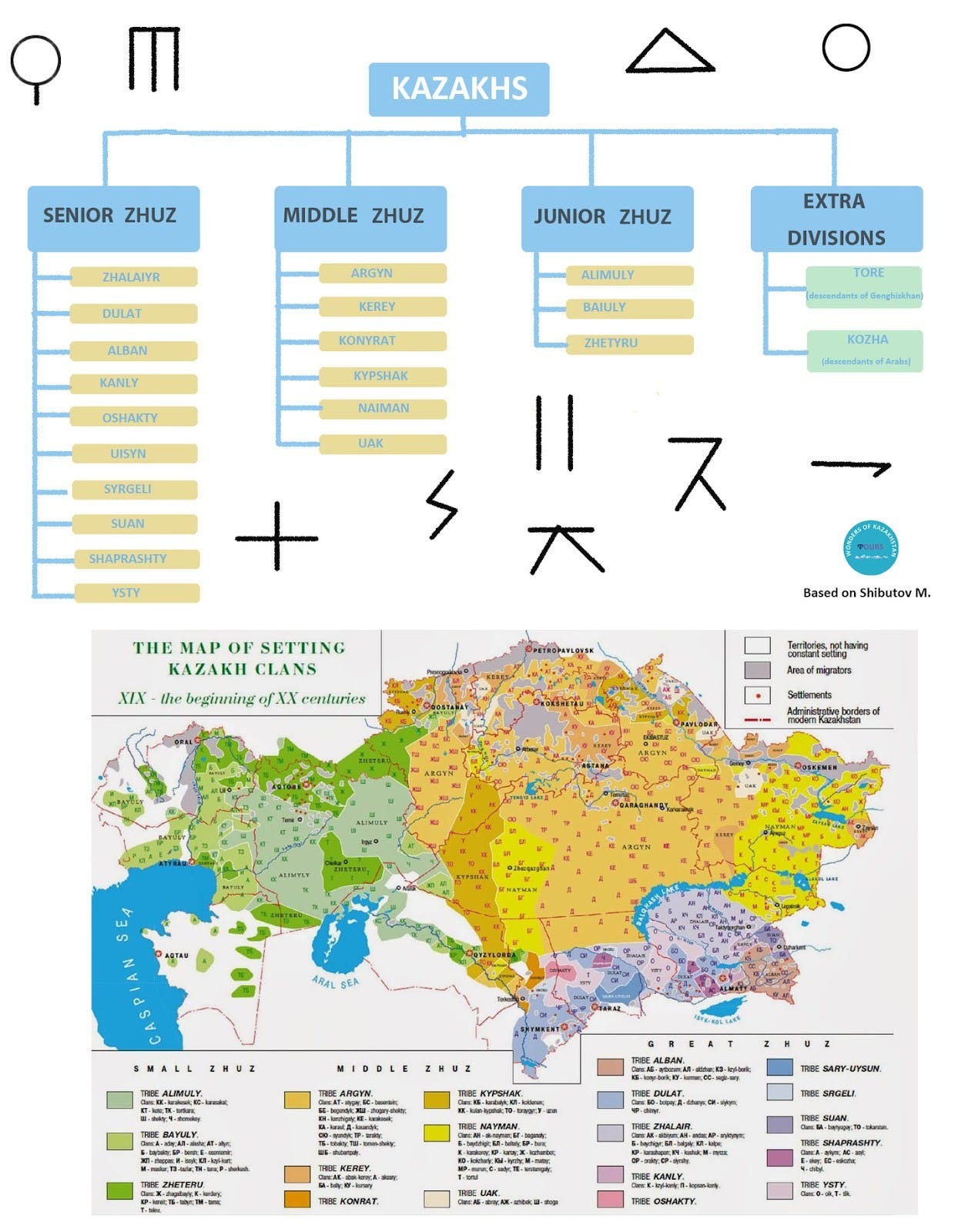
Within each zhuz, there were further subdivisions into clans. These clans were expected to follow the khan’s authority, while smaller clans relied on larger ones—not economically, since each grazed its livestock independently, but morally and socially, especially during times of external threat. This structure fostered strong bonds, mutual responsibility, and loyalty across society.
One passage from my grandfather’s book powerfully challenges the common assumption that tribalism is inherently divisive:
“What united all Kazakhs was the sacred battle cry ‘Alash!’ Every Kazakh, regardless of their zhuz, answered to ‘Alash!’ as a symbol of shared identity. When asked, ‘Who are you?’ each Kazakh would respond, ‘We are the children of the three zhuzes,’ followed by their clan’s name. To ignore this call was a deep shame, marking one as dishonorable in the eyes of the entire community.”
This unified tribal identity is central to my vision today. Tribalism, in this sense, is not fragmentation—it is a connective system that reinforces shared responsibility, cultural continuity, and stewardship of the land. That stewardship, I believe, is foundational to a sustainable future rooted in Kazakh tradition.
Now, I may be biased. My own tribe—Kishi Zhuz—would likely control a large share of oil and gas resources under such a system. But more broadly, I believe natural resources should be allocated back to and managed by the tribes themselves, similar to the model used by Alaska Native corporations, with a portion of revenue contributing to a federal budget. This approach would allow regions to manage their own resources while still supporting national cohesion and shared state functions.
Philosophy of the Built Environment

What I’m describing isn’t just a lifestyle—it’s a philosophy of the built environment, rooted in Kazakh tradition and adapted for modern realities.
Historically, Kazakh society was guided by the belief that the land belongs to no one but God, and anyone who can benefit from its resources has the right to use it. This worldview shaped a socio-economic system based on seasonal pasture rotation—kystau (winter), kokteu (spring), zhailau (summer), and kuzdeu (autumn)—which allowed the vast steppe to be used sustainably over time. Natural grass cover and water availability were central to both daily life and the broader economic system. Land remained largely communal until the late 19th century, when colonization introduced private land ownership.
Reapplying this philosophy today gives us a rare opportunity to rebuild our relationship with the land and revive rural regions. Decentralizing power and returning control to local communities isn’t just practical, it aligns with our history and values. It also reduces corruption and empowers Kazakh communities to manage their own resources directly.
Modern technology allows us to elevate this traditional system to a level never before possible. Tools like virtual fencing, GPS collars, and satellite monitoring make it possible to manage vast territories efficiently without fragmenting natural landscapes. Technology also enables a comfortable life far from urban centers, one that still meets modern human needs without sacrificing connection to land or community.
To be clear, I’m not suggesting that the entire country should become nomadic. Kazakhstan still needs intensive production systems, industry, and cities. In the image above, you can see Almaty, the city where I was born. It’s vibrant, beautiful, and absolutely worth visiting.
But when it comes to rural development, which encompasses the majority of Kazakhstan’s landmass, I am convinced that Steppelands 2.0 is not just one possible path. It is the right one.
This is a reworked transcript of my talk at the Yale Philosophy & the Built Environment Working Group, October 30, 2024. I used chatGPT to make it more reader-friendly. —Jamila, 1/1/2026
Excellent reading, I like your style and ease.
Indeed, our common heritage — Natural Capital, as it is now commonly referred to — requires a smart, modern approach. Time is pushing us to change our approach, and technologies (EO, eDNA, AI) have already made this possible.